Guy Warren Ballard (1878 –1939) was an American mining engineer who became, with his wife, Edna Anne Wheeler Ballard, the founder of the "I AM" Activity.
Both Edna and Guy studied Theosophy[1] and the occult extensively.
Ballard visited Mount Shasta, California[2] in 1930, where he met another hiker who identified himself as Saint Germain.[3] Mr. Ballard's experiences take place within the larger North American mountain ranges. Ballard provided details of his encounters in a series of books Unveiled Mysteries and The Magic Presence, using the pen name "Godfré Ray King."
In 1930, fifty-five years after the Theosophical Society was founded, Guy Ballard introduced the concept of "Ascended Masters"[4], founding what later became known as the Ascended Master Teachings. Guy Ballard and Elizabeth Clare Prophet[5] from the 1960s to the 1990s added more than 200 new "Ascended Masters" that they claimed to receive dictations from in addition to receiving dictations from the original Masters of the Ancient Wisdom of Theosophy. However, the Theosophical Masters differ from the Ascended ones in many respects.
For example the so-called Ascended Masters, as their name suggests, are supposed to be Masters who have experienced the miracle of ascension, as it is said Jesus did. The original teaching, channeled by Guy Ballard, was that a new Ascended Master would not die but would take the body up with him. This teaching of ascension is in direct opposition to the Theosophical teachings. Mme. Blavatsky also rejected ascension as a fact, calling it “an allegory as old as the world.” In the Theosophical view, the Masters of Wisdom retain their physical bodies.
Guy Ballard, his wife Edna, and later son Donald, it is believed, became the "sole Accredited Messengers" of Saint Germain. Their teachings form the original nucleus for what are today called the Ascended Master Teachings.
 The "I AM" Activity started from public lectures about these encounters and grew rapidly in the 1930s. Ballard lectured frequently in Chicago about Saint Germain's mystical teachings, in which America was destined to play a key role. By 1938, there were claimed to be about a million followers in the United States.
Guy Ballard died in 1939 and Edna Ballard died in 1971. Guy Ballard originally claimed that Ascension meant the ability to enter heaven alive, but after Guy Ballard died a normal death of natural causes, the word "Ascension" was redefined by the I AM movement as (resulting from one's services during one's lifetime for the Ascended masters) being able to rise to a higher level of heaven after one's death than the average person, and thus attaining the status of an Ascended Master. Specifically, this means in the original teachings of Theosophy that, to become a Master, he would have had to ascend upon his death to the fifth level of Initiation.
[1] Theosophy, in its modern presentation, is a spiritual philosophy developed since the late 19th-century. Its major themes were originally described mainly (though not exclusively) by Helena Blavatsky (1831–1891), co-founder of the Theosophical Society. To promote Theosophy, the Theosophical Society was founded in New York City in 1875 with the motto, "There is no Religion higher than Truth". Its principal founding members were Helena Petrovna Blavatsky[6] (1831–1891), Henry Steel Olcott [7] (1832–1907), and William Quan Judge [8](1851–1896). During the two decades that followed the death of Blavatsky, a number of leading Theosophists expanded or reinterpreted her own and other theosophical works. Prominent among them were C(harles) W(ebster) Leadbeater (1854–1934), then considered the Society's main occult investigator, and Annie Besant (1847–1933), who became the International President of the Society in 1907, following the death of Olcott.
 [2] Mount Shasta, a prominent northern California landmark.
 [3] The Count of St. Germain (1712 - 1784) has been variously described as a courtier, adventurer, charlatan, inventor, alchemist, pianist, violinist and an amateur composer. His background is sketchy but apparently he began to be known under the title of the Count of St Germain during the early 1740s.
[4] Ascended Masters, in the Ascended Master Teachings is derived from the Theosophical concept of Masters of the Ancient Wisdom or "Mahatmas". They are believed to be spiritually enlightened beings who in past incarnations were ordinary humans, but who have undergone a process of spiritual transformation originally called Initiation in Theosophy but in the Ascended Master Teachings it is referred to as Ascension. The term "Ascended Master" was first introduced in 1934 with the publication of “Unveiled Mysteries” by Guy Ballard in The "I AM" Activity. This concept was further popularized by authors such as Baird T. Spalding [9] during the 1930s.
 [5] Elizabeth Clare Prophet (1939 - 2009) was an American spiritual author and lecturer who was the leader of The Summit Lighthouse and Church Universal and Triumphant, a New Age religious movement which gained media attention in the late 1980s and early 1990s while preparing for potential nuclear disaster.
In 1961, Mark met Elizabeth Clare Wulf; they married in 1964 and had four children. Wulf, subsequently Elizabeth Clare Prophet, had grown up under influences including New Thought and Christian Science.
Mark L. Prophet (1918 - 1973) was an American born in Chippewa Falls, Wisconsin. He claimed to be a Messenger of the Ascended Masters and founded The Summit Lighthouse organization on August 7, 1958 in Washington D.C..
 [6] Helena Petrovna Blavatsky (1831- 1891) was a founder of Theosophy and the Theosophical Society. Blavatsky grew up amid a culture rich in spirituality and traditional Russian mythologies, which introduced her to the realm of the supernatural.
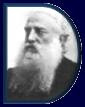 [7] Colonel Henry Steel Olcott (1832 – 1907) was an American military officer, journalist, lawyer and the co-founder and first President of the Theosophical Society.
 [8] William Quan Judge (1851 –1896) was a mystic, esotericist, and occultist, and one of the founders of the original Theosophical Society.
 [9] Baird Thomas Spalding (1872–1953) was an American writer. He is the author of the spiritual book series : “Life and Teaching of the Masters of the Far East”. Although Spalding's books claimed he was born in England in 1853, Spalding was born in North Cohocton, New York in 1872. He spent much of his life as a mining engineer in the American West.
In 1924 Spalding published the first volume of “Life and Teaching of the Masters of the Far East”. It describes the travels to India and Tibet[10] of a research party of eleven scientists in 1894. During their trip they claim to have made contact with "the Great Masters of the Himalayas", immortal beings with whom they lived and studied, gaining a fascinating insight into their lives and spiritual message. This close contact enabled them to witness many of the spiritual principles evinced by these Great Masters translated into their everyday lives, which could be described as 'miracles'. Such examples are walking on water, or manifesting bread to feed the hungry party.
Although popular, Baird Spalding was an enigmatic figure and the authenticity of the events described in the Life and Teachings have never been confirmed. Spalding never produced any evidence of the claimed trip, and none of the other scientists were ever identified. Skeptics argue that Spalding did not visit India as claimed, and his works belong to the magical autobiography genre.
 [10] Tibet is a plateau region in Asia, north of the Himalayas. It is the traditional homeland of the Tibetan people as well as some other ethnic groups such as Monpas, Qiang, and Lhobas, and is inhabited by considerable numbers of Han and Hui people. Tibet is the highest region on earth, with an average elevation of 4,900 metres (16,000 ft).
It's not unfamiliar for people to make claims concerning Tibet.

Cyril Henry Hoskin (1910 –1981), more popularly known as Tuesday Lobsang Rampa, was a writer who claimed to have been a lama in Tibet[10] before spending the second part of his life in the body of a British man. Hoskin described himself as the "host" of Tuesday Lobsang Rampa. The name Tuesday relates to a claim in The Third Eye that Tibetans are named after the day of the week on which they were born.
Explorer and Tibetologist Heinrich Harrer (best known for his books Seven Years in Tibet (1952) and The White Spider (1959)) was unconvinced about the book's origins and hired a private detective from Liverpool named Clifford Burgess to investigate Rampa. The findings of Burgess' investigation were published in the Daily Mail in February 1958. It was reported that the author of the book was a man named Cyril Henry Hoskin, who had been born in Plympton, Devon in 1910 and was the son of a plumber. Hoskin had never been to Tibet and spoke no Tibetan. In 1948, he had legally changed his name to Carl Kuon Suo before adopting the name Lobsang Rampa.
Rampa was tracked by the British press to Howth, Ireland and confronted with these allegations. He did not deny that he had been born as Cyril Hoskin, but claimed that his body was now occupied by the spirit of Lobsang Rampa.
Lobsang Rampa went on to write another 18 books containing a mixture of religious and occult material. One of the books was described as being dictated to Rampa by his pet Siamese cat, Mrs Fifi Greywhiskers. Faced with repeated accusations from the British press that he was a charlatan and a con artist, Rampa went to live in Canada in the 1960s. He and his wife, San Ra'ab, became Canadian citizens in 1973, along with Sheelagh Rouse (Buttercup) who was his secretary and regarded by Rampa as his adopted daughter.
Fra Andrew Bertie, a Polyglot schoolmaster who became the first English Grand Master of the Knights of Malta. Andrew Willoughby Ninian Bertie ( 1929 – 2008) was Prince and Grand Master of the Sovereign Military Order of Malta from 1988 until his death in 2008. An obituary of Fra Andrew Bertie, Grand Master of the Sovereign Military Order of Malta, claims that he was involved in unmasking Lobsang Rampa as a West Country plumber. https://en.wikipedia.org/wiki/Lobsang_Rampa
"His grasp of Tibetan later enabled him to unmask a Himalayan shaman as a West Country plumber."
https://web.archive.org/web/20100524073901/http://www.timesonline.co.uk/tol/comment/obituaries/article3417529.ece
 Lobsang Rampa died in Calgary in 1981, at the age of 70. Museum of Hoaxes
The source of the idea that there is a hidden sanctuary of ascended Lemurian masters under Mount Shasta.
“A Dweller on Two Planets or The Dividing of the Way” is a book written by Frederick S. Oliver, who was born in 1866. The book was finished in 1886 and in 1894 the manuscript was typewritten and copyrighted and again in 1899, owing to an addition. It was not published until 1905, by his mother Mary Elizabeth Manley-Oliver, six years after Oliver's death in 1899.
Oliver started to write this book at the age of eighteen, in 1883-4, while surveying the boundaries of his family's mining claim. Oliver was born in Washington D.C. in 1866 and came to Yreka, California, with his parents when he was two years old. Yreka is just north of Mount Shasta, a huge dormant volcanic peak in Northern California. He found himself writing uncontrollably in his notebook. He ran home in terror, where he sat down and let his hand write. These automatic writing spells continued for several years; he would write a few pages at a time. He completed writing this book in 1886, and died at the age of 33 in 1899.
Oliver claimed that the book had been channeled through him via automatic writing, visions and mental "dictations", by a spirit calling himself Phylos the Thibetan who revealed the story to him over a period of three years, beginning in 1883. The book has been influential on ideas concerning Atlantis, Lemuria and Mount Shasta. In a 2002 introduction, John B. Hare says that it "is openly acknowledged as source material for many new age belief systems, including the "I AM" movement, the Lemurian Fellowship, and Elizabeth Claire Prophet."This book is the source of the idea that there is a hidden sanctuary of ascended Lemurian masters under Mount Shasta.
 Phineas Parkhurst Quimby


