Monday, October 17, 2011

You are a radiant center of the Christ light, mighty to attract your good, and to radiate good to others.

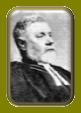
In the 1930's Ernest C Wilson, a dynamic Unity Minister, had an experience that challenged his beliefs. As a result of the challenge, Dr. Wilson perceived an opportunity.

For one year Ernest meditated upon Jesus Christ. The effect on him was incredible. his Contemplation of Christ did not merely increase his faith, but transformed his life.

Dr. Wilson's meditations brought forth many fruits. Mr. Wilson shared his experiences with Unity students in the form of two books and an incredible series of lessons: The Master Class Lessons. Over 12 thousand students participated in the first 12 classes offered.

The Master Class Lessons consist of six lessons. These six lessons assist the student in gaining an intellectual understanding of Unity's basic teachings and most importantly, how to apply them to daily life.


The Master Class Lessons was first published in 1935


What you see, that you will think; what you think, that you will conceive; what you conceive, that you will bring forth.
Make the most of what you have. Bless your work, your associates, your relatives. Be single-eyed to goodness. Cultivate the habits that will serve you, the habit of prayer, of right thinking, of vision, and in time of need they will rise up to bless you.
Giving is a fine art, but to be a good receiver takes even greater spiritual understanding and unselfishness.
We must learn to receive new friends and new ideas graciously.
We must not snub familiar gifts, familiar blessings.
Cutting the telephone wire does not change the bad news. Fearlessly to face, to meet, and by the power of Truth to transform conditions is wiser than to deny them.
Every one in his human nature makes mistakes: every one in his divine right has power to overcome them.

Sunday, October 16, 2011

This came like a dayspring from on high.

George Matheson (1842-1906)


Born: March 27, 1842, Glasgow, Scotland.
Died: August 28, 1906, Avenell House, North Berwick, Edinburgh, Scotland.
Buried: Family vault, Glasgow Necropolis.


Born with poor vision, Matheson’s eyesight gradually worsened until he was almost totally blind.
However, he was academically gifted, and his sisters learned Latin, Greek, and Hebrew to help him study. In light of his ailment of poor sight, he had a reputation of being joyful, with a great spirit about him that was not easily discouraged. He graduated from the University of Edinburgh (MA 1862), then became a minister in the Church of Scotland. He pastored in the resort town of Innelan for 18 years; due to his ability to memorize sermons and entire sections of the Bible, listeners were often unaware he was blind. In 1885 he was invited to come and preach to Queen Victoria by the Queen herself. He delivered a sermon entitled, “The Patience of Job.” The Queen was so moved by the sermon she asked for it to be printed and published for more people to be able to receive. In 1886, Matheson became pastor of St. Bernard’s Church in Edinburgh, where he served 13 years. He spent the remaining years of his life in literary efforts. His works include: • Sacred Songs (Edinburgh, Scotland: W. Blackwood, 1890)
Hymns
1. Come, Let us Raise a Common Song
2. Father Divine, I Come to Thee

3. Gather Us In, Thou Love That Fillest All

4. Jesus, Fountain of My Days

5. Lend Me, O Lord, Thy Softening Cloud
6. Lord, Thou Hast All My Frailty Made

7. Make Me a Captive, Lord

8. O Love That Wilt Not Let Me Go

9. There Are Coming Changes Great

10. Three Doors There Are in the Temple


One of his hymns, "O Love That Wilt Not Let Me Go," has passed into the popular hymnology of the Christian Church. Matheson himself wrote of the composition:
My hymn was composed in the manse of Innelan [Argyleshire, Scotland] on the evening of the 6th of June, 1882, when I was 40 years of age. I was alone in the manse at that time. It was the night of my sister’s marriage, and the rest of the family were staying overnight in Glasgow. Something happened to me, which was known only to myself, and which caused me the most severe mental suffering. The hymn was the fruit of that suffering. It was the quickest bit of work I ever did in my life. I had the impression of having it dictated to me by some inward voice rather than of working it out myself. I am quite sure that the whole work was completed in five minutes, and equally sure that it never received at my hands any retouching or correction. I have no natural gift of rhythm. All the other verses I have ever written are manufactured articles; this came like a dayspring from on high.


O Love that wilt not let me go,
I rest my weary soul in thee;

I give thee back the life I owe,

That in thine ocean depths its flow

May richer, fuller be.


O light that followest all my way,

I yield my flickering torch to thee;

My heart restores its borrowed ray,

That in thy sunshine’s blaze its day

May brighter, fairer be.


O Joy that seekest me through pain,

I cannot close my heart to thee;

I trace the rainbow through the rain,

And feel the promise is not vain,

That morn shall tearless be.


O Cross that liftest up my head,

I dare not ask to fly from thee;

I lay in dust life’s glory dead,

And from the ground there blossoms red

Life that shall endless be.

--George Matheson

Friday, October 14, 2011

Commitment

Although it's not always easy,
this is part of loving someone
unconditionally
with all your heart
and

with all you have to give!


It's a promise that should last a lifetime.


It
describes you as a person
and

describes the essence of your soul.


It's a promise to be there,

one for the other,


no matter what happens,

no matter who falls.


For better or for worse.


For better


or

for worse
.

(Lynn Johnson)


One of my favorite blogs.
It speaks for itself.


Thursday, October 13, 2011

You have to love little kids.

The Candy With The Little Hole
The children began to identify the flavors by their color:

Red.....................Cherry
Yellow..................Lemon
Green...................Lime
Orange ...............Orange

None of the children could identify the one taste.

The teacher said, 'I will give you all a clue. It's what your mother may sometimes call your father.'

One little girl looked up with a smile and yelled,

‘Oh my God! They're HONEY lifesavers!’
Under certain circumstances, profanity provides a relief denied even to prayer.
Mark Twain

Smile and the World Smiles With You.

Wednesday, October 12, 2011

First Lessons in the New Thought

Introductory
THERE is an earnest desire on the part of most people to-day to know about the new Mental Healing, and especially to know how to apply it with benefit to themselves.

If it is good and worth having, they want it. They want to know the truth about it and to know how to use it if it is useful.

This is in accord with the good, plain common sense of Americans.

But there are many who have not yet become familiar with it. Others have learned somewhat of it, yet not enough to grasp its principles. Still less are they able successfully to use the same.

'These First Lessons are designed to meet the wants of such persons, and of beginners generally in their study of the subject. The lessons are elementary, and the endeavor has been to present the plain, simple facts and principles of the Mental Cure in the simplest, plainest English, — in un-technical language easily understood by everyone. The subject is many sided. We may look at it on its therapeutical side, as a cure, or we may consider its moral side — for it surely has a moral side. And it has a religious or spiritual side, as can readily be seen.

And yet the main truths and basic principles of it are simple, easy to learn and easy to understand.

The Power of the Mind


TO show plainly the truth of Mental Cure, and to make clear how naturally and easily it is done, we will start from the simple, well - known facts which everybody knows and will readily acknowledge. The first of such facts is that the mind has an influence, a power, over the body. The mind, its activities, its states or conditions, has an influence on the body. That is, the thoughts and feelings, emotions and passions, exert a power, have an effect, upon the body. The doctors had long known and testified that this is true, though they took little advantage of it for good.

A noted physician years ago stated the truth in this excellent way : " The mind has a powerful influence over the body for health or disease." No Christian Scientist ever voiced the fact more tersely or truthfully. There is nothing surer, nothing more thoroughly established, than the fact of the power of the mind to affect the body, — to produce illness or to restore health. Those who have known nothing about mental cure see plainly that this is true, for continually, right before their eyes, they have proofs of it. Indeed, they probably know it well from personal experience — to some extent. They have seen first or last how undue excitement, severe depression, intense anxiety, have affected their appetite and digestion. Perhaps from the strain of business troubles, dread of failure and loss, or from some terrible affliction, they have been thrown suddenly into a dangerous fever or a complete break-down of health.

On the other hand, everybody knows, after these many years of prevalent mental cure, as also by their own experience, how the mind when cheerful, happy, joyous, acts ever powerfully to preserve and to restore the health. All this seems simple and true to everybody, now that attention has been called thereto and all have observed or experienced it.

Here we have the primary fact, the obvious truth, acknowledged by everybody, of mental cure. It is singular that this should not always have been seen and known by everybody, or that it should ever have been doubted. If anyone is asked, even a child, what gives life to the body, he would answer : the soul or spirit. The common belief is that when the mind or spirit goes out of the body the life is gone and dissolution takes place. If the spirit is the life of the body it surely is also its health, the lesser being included in the greater. Now let us see what follows from this.

Step by step we wish to lead our readers who are unfamiliar with this Cure to see the truth about it and the way in which it can be made available for manifold and inestimable benefit. One must notice well the statement that the mind can act, and in fact always does act, as asserted by the doctors, and as we have all experienced, " for the health or for the disease 'of the body." The mind can act in two ways, one way for disease, the other way for health.

What more natural or important, when we understand this fact, than that we should ask, in the first place, what states or conditions the mind is in when it works to produce illness, when it works to throw the body into disease. The answer is so simple and easy that it states itself. We have seen, by the illustrations already given, that it is such states as fear, dread, anxiety, disappointment, despair. These states of mind are the disturbed, depressed, distressed thoughts and feelings.

On the other hand, we have seen, by the examples already presented, that the states of mind which are favorable to health and which work for recovery are those that are equable, tranquil, that are exhilarating instead of depressing, cheerful instead of sad, joyous instead of grievous.

The general law seems to be that all the tranquil, orderly, undisturbed states of mind, of every kind and in any degree, always tend to health, — are healthful ; while, oppositely, all the disturbed, distressful states, of every sort and to any extent, tend always to produce bodily disorders, — are diseaseful.

How simple all this is, and how true I Did anyone ever have any experience not in accord with it ? We do not say that a little fear, a slight worry, a small degree of distress of mind, will make one seriously ill immediately. But all these have, even if in small measure, their disordering effects, and, if long continued, bring serious consequences.

Here, to repeat it, we have, simple and self evident, the first important fact or fundamental truth in Mental or Spiritual Therapeutics, namely : that the tranquil, calm, poised, peaceful (what we may call the natural) states of mind always tend to health — are healthful ; and, oppositely, that the disturbed, disquieted, distressed states of mind ever tend to disorder the body — are diseaseful.

And all this is by a natural law which is of transcendent scope and which has far-reaching consequences. Knowledge of it and conformity to it promise to be of immense practical value to mankind.

Excerpts from: First Lessons In The New Thought: Or The Way To The Ideal Life (1904) by Jonathan Wingate Winkley

J.W. Winkley was the editor of The New Thought Magazine “Practical Ideals” and one of the first New Thought MD's. Dr. Winkley, began his ministerial journey as a Unitarian minister(1876-1882), studied Christian Science, then became an enthusiastic participant in the Mental Science Movement, which later became known as New Thought, Winkley established the Church of the Divine Unity in 1886.


New Thought was "the fine art of recognizing, realizing and manifesting the God in the individual."
The first organizations were established to teach this fine art as applied to mental healing.
Therefore, the recognition of "the Christ within" was the cardinal principle.
The later organizations sought to make this fine art known in its relation not merely to mental healing but to the whole of life.
Did New Thought become a recognized phase of liberal Christianity throughout the world?

Tuesday, October 11, 2011

CAN DISEASE BE ENTIRELY DESTROYED?

BY EMMA G. WARE
Emma G. Ware was one of the copyists that assisted Dr. P. P. Quimby in his Portland, Maine healing office from 1859 to 1865. This article was originally published in The Spirit of the New Thought, Editor: Horatio W. Dresser, Publisher: Thomas Y. Crowell, New York, N.Y. 1917. Miss Ware was a patient and follower of Dr. Quimby along with her sister Sarah. They were daughters of Judge Ashur Ware, of the U. S. Court. It was these sisters that suggested to him the propriety of putting into writing the body of his thoughts.


Hermetic Brotherhood of Luxor (HBofL)

"In 1870 (and not in 1884, as the Theosophists claimed), an adept of calm, of the ever-existing ancient Order of the H. B. of L., after having received the consent of his fellow-initiates, decided to choose in Great Britain a neophyte who would answer his designs. He landed in Great Britain in 1873. There he discovered a neophyte who satisfied his requirements and he gradually instructed him. Later, the actual neophyte received permission to establish the Exterior Circle of the H. B. of L."

The Hermetic Brotherhood of Luxor was an initiatic occult organisation that first became public in late 1884, although according to documents of the order it began its work in 1870.
Hermetic Brotherhood of Luxor had just as much influence on what would become the modern Western Mystery Traditions and the Golden Dawn.
"H.B. of L." had been nearly forgotten by modern occultists after the turn of the twentieth century, especially in the wake of the "second occult revival" in the 1960s and '70s.
It is in the occult atmosphere of 1870's England that three men formed an influential magical order that included practical magical work. The extremely important history of the Hermetic Brotherhood of Light, or Luxor also known simply as the HBofL.
Hargrave Jennings (1817-1890) was a British Freemason, Rosicrucian, author on occultism and esotericism, and amateur student of comparative religion.
Max Théon (1848-1927) perhaps born Louis-Maximilian Bimstein, was a Polish Jewish Kabbalist and Occultist. In London while still a young man, he inspired The Hermetic Brotherhood of Luxor in 1884.
Paschal Beverly Randolph (1825 – 1875) was an American medical doctor, occultist, Spiritualist, trance medium, and writer. Randolph is notable as perhaps the first person to introduce the principles of sex magic to North America.
There is some dispute over whether Theon taught Blavatsky at some stage. The Theosophical adept Tuitit Bey might have been based on Theon.
If you search you will find Thomas H. Burgoyne(1855-1894), an astrologer and founder of the Hermetic Brotherhood of Luxor. Spontaneously psychic, he claimed that as a child he came into contact with the Brotherhood of Light, a group of discarnate, advanced beings who attempt to guide the destiny of humankind.
Actually Thomas Henry Dalton was T. H. Burgoyne, one of the founders of the Hermetic Brotherhood of Luxor, the author of The Light of Egypt[1].
What we actually know about Dalton is: not much. There is as much legend and surmise in the various versions of his biography one can find on the Web as there is verifiable, or triangulated, fact:
• Thomas Henry Dalton married, in the early 1880s, and fathered two children, a boy and a girl, before he did seven months in prison for mail fraud in the UK in 1883 (a fact we know for sure because it served the Theosophical Society well to document and broadcast it, well before 'smear campaign' was part of the cultural vocabulary)
• He left that family, in England, when he came to the US to found the HBofL colony with Peter Davidson
• That family survived, even prospered, and came to the United States, with their children/grandchildren in tow, in the early 1920s

[1] Sarah Stanley Grimke(Personified Unthinkables, 1884; First Lessons in Reality; A Tour Through the Zodiac; all bound under Esoteric Lessons, 1900) was credited with co-authorship of The Light of Egypt by her sister, who wrote to Sarah’s daughter after her death. Daughter of an abolitionist clergyman who served in three denominations, Stanley married Archibald Grimke[(1849 –1930) an American lawyer, intellectual, journalist, diplomat and community leader in the 19th and early 20th century] in 1879 (parents opposed her interracial marriage) and the next year bore their only child, Angelina Weld Grimke.
Archibald was the biracial son of Henry Grimke, a white slave owner and Nancy Weston, an enslaved woman of European and African descent. She was described in one account as the most beautiful black woman in Charleston. His aunts Sarah and Angelina Grimke were leaders in the abolitionist movement who like Archibald had left their native Charleston and relocated to Massachusetts.
After the collapse of their marriage in 1883, Sarah took young Angelina to live with her in Michigan, but in 1887 returned the child to her father in Washington, D.C. due to the discrimination she faced as the mixed-race daughter of a white woman. For the rest of her life Sarah wrote on occultism and mental healing and traveled widely. Whatever the nature of the collaboration, it seems that Grimke played the role of an HBofL member living in California and assisting Burgoyne in his writing. But her stay in California was not long, as in 1888 she went to New Zealand at the invitations of a publisher, and remained there until a heart attack required her return to the US where she initially stayed with her parents in Michigan. Sarah returned to California, still in poor health, and died in San Diego in 1898.
One of the earliest of the mental science writers, Miss S. S. Grimke, in a book bearing the curious title Personified Unthinkables, 1884, interpreted the practical idealism with special reference to mental pictures and their influence. This emphasis on mental pictures was characteristic of Mr. Quimby. In fact, Quimby sometimes described the mental part of his treatment with reference to the pictures he discerned intuitively in the patient's mind, and the ideal pictures in connection with which "the truth of a patient's being" was established in place of the "error or disease."
A History of The New Thought Movement
by Horatio. W. Dresser
1919
Chapter Six - The Mental Science Period
Which isn't to say that HBofL or Grimke's works in anyway resembled Quimby. Dresser was merely giving credit to her as the 1st to reference mental pictures.